HomeGallery
concept · not builtreference buildsvideo tours

The look
of the yard.

Alpine Village is not built, so there are no photographs of finished Alpine Village units — and we will not invent them. What follows is honest: typographic concept tiles that describe the design intent, and real video tours of independent container builds that show what the finished result can look like.

Honesty note · Every tile below is a concept description, not a photo. The videos are independent builds by other people, embedded to illustrate the container-home result — they are not Alpine Village units.

Why there are no fake photos

It would be easy to fill this page with glossy renderings and caption them as if they were finished units on a Del Valle lot. We are not going to do that. Alpine Village is a concept, and pretending otherwise — inventing a photograph of a unit that does not exist, or a caption describing a resident who does not live there — would poison the honesty the rest of this site is built on. So this gallery does two truthful things instead: it describes the design intent in words, tile by tile, and it shows real container homes other people have actually built, on video, so you can judge the finished result for yourself. When Alpine Village is built, this page will hold real photographs of real units. Until then, it holds the truth.

CONCEPT TILES

The design intent.

Described, not photographed

The work bay

A 40′ high-cube ground module, end wall opened for a roll-up door, steel floor built to take tools and traffic — the maker’s storefront onto the shared yard.

The stack

A living module set over the work bay: insulated, clad, windowed — the private home carried structurally by the box below, reached by an exterior stair.

The yard

Thirteen units drawn around a common courtyard — the container-depot grid turned into a neighborhood, with the shared utilities and gathering space that let each unit stay small.

The Corten skin

Weathering-steel exteriors that take on a stable rust-brown patina by design — the honest, low-maintenance material that gives a container village its unmistakable industrial character.

The alpine line

The topographic contour motif that runs through this whole site — a nod to “Alpine,” rendered as the survey lines of a lot rather than a mountain postcard.

The commons

A shared work-and-gather space — the thirteenth kind of room a village has that a single house never does, and the reason the private units can be so lean.

FIELD TAPE

Real container homes, on tape.

Independent builds · not our units
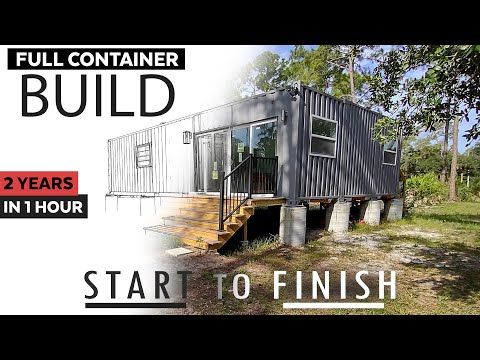
Videos load only when you click · privacy-friendly youtube-nocookie · the builds shown are not Alpine Village units.

What a real tour will show

When there are units to photograph, this is the tour we intend to shoot — and naming it now is itself a form of honesty, a checklist we can be held to. The crane morning: a finished ISBU shell swung onto its footing in a single lift, the moment that makes modular construction feel like magic and is really just good logistics. The cut-and-weld reality: the openings sawn into corrugated steel and the tube reinforcement welded back around them, because that is where a container becomes a room. The insulation layer most tours skip: the continuous closed-cell foam or exterior board that defeats thermal bridging, invisible in the finished photo but the difference between comfortable and unlivable in a Central Texas summer. The work bay in use: a real maker at a real bench with the roll-up door open to the yard. And the village at dusk: thirteen Corten boxes around a shared courtyard, lit — the picture the whole concept is for. We will not stage any of it before it is real.

SOURCES

Cited facts.

Verify · don't take our word